
The CO 27 denial code means the payer says the patient’s coverage had ended before the date of service. Sometimes the patient really lost coverage. Other times the termination was backdated, the claim carries the wrong dates, or the eligibility check was stale. The first step is always to confirm the exact coverage dates. This guide shows how to confirm them, rebill or appeal, and prevent repeats.
| Key takeaways CO 27 means the payer says coverage had ended before the date of service.Check the termination date first. Retroactive terminations can end coverage earlier than the patient expects.The group code decides liability: CO leaves the balance with the provider, PR can leave it with the patient.Saved eligibility checks and fast rebilling to any new payer protect revenue. |
What the CO 27 Denial Code Means
CO 27 means the payer says the expenses were incurred after coverage terminated. CARC (claim adjustment reason code) 27 is “Expenses incurred after coverage terminated,” and the CO (contractual obligation) group code places the unpaid amount with the provider. The key fact to confirm is the termination date.
CO 27 is one of the eligibility denials grouped in our [LINK: CO denial codes list and meanings | /co-denial-codes-list/].
The wording comes from the X12 claim adjustment reason code list. Read the group code first. The same reason code can arrive with PR, which points to patient responsibility, so CO 27 and PR 27 lead to different billing steps.
Why CO 27 Happens
| Cause | Example | First check |
| Coverage ended before the visit | Patient changed jobs and the plan ended at month-end | Verify the termination date with the payer |
| Retroactive termination | Unpaid premiums led the insurer to end coverage back to an earlier date | Check whether the plan was terminated after the visit |
| Outdated eligibility check | Eligibility was verified weeks before the visit | Run a new eligibility inquiry |
| Wrong date or plan data on the claim | Date of service keyed with the wrong month or year | Compare the claim with the encounter record |
| Payer error or later reinstatement | Coverage was reinstated after payment, but the claim already denied | Ask the payer to review and reprocess |
When Coverage Ends Retroactively
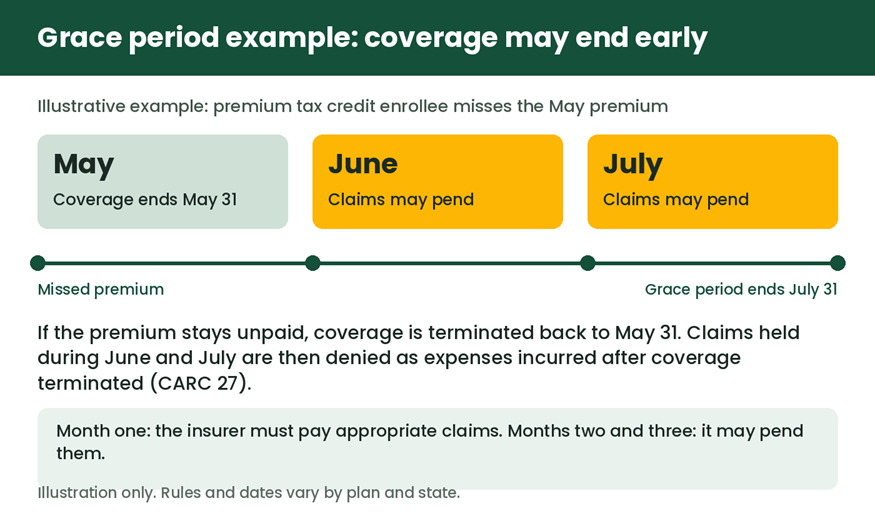
Retroactive terminations catch many practices. According to HealthCare.gov’s grace period guidance, a marketplace enrollee who uses the premium tax credit usually gets a three-month grace period after missing a premium, but unpaid premiums can end coverage back to the first month missed.
The CMS coverage effectuation and grace period job aid adds the claims side: the insurer must pay appropriate claims for the first month, may pend claims in months two and three where state law allows, and denies pended claims if coverage is terminated. Rules differ by plan and state, so read the payer’s own notices.
How to Fix a CO 27 Step by Step
- Confirm the dates. Run an eligibility inquiry, also called a [LINK: 270/271 eligibility transaction | /270-271-eligibility-transaction/], and check the effective and termination dates against the date of service.
- Check the claim for errors. Compare the date of service, member ID and plan with the encounter record.
- Ask the patient about other coverage. Look for a new employer plan, a spouse’s plan, COBRA or a government program.
- Rebill the right payer. If coverage exists, bill that payer right away because its filing limit is already running.
- Appeal with proof if you verified in time. Send your saved eligibility response, with date, time and reference number, along with the claim.
- Close the account correctly. If no coverage existed, handle the balance by the group code and your self-pay policy.
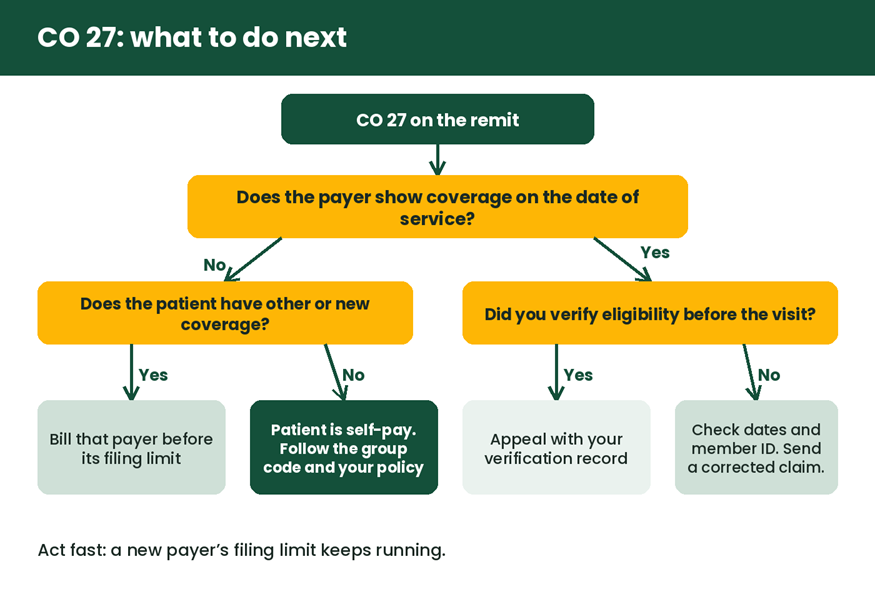
Diagram summary: confirm coverage dates, rebill any other payer, appeal with your verification record, or treat the balance as self-pay when no coverage existed.
Sample appeal wording: “We request reconsideration of claim [number], date of service [date]. Eligibility was verified on [date and time], reference [number], showing active coverage on the date of service. A copy of the response is enclosed.”
Can You Bill the Patient for CO 27?
Not under the CO group code. CO places the unpaid balance with the provider, and many payer contracts expect providers to verify eligibility before the visit. If the remittance assigns the same reason under PR, the patient may owe it, especially if they truly had no coverage that day. Track any patient balance in your A/R follow-up process.
CO 27 vs Similar Denials
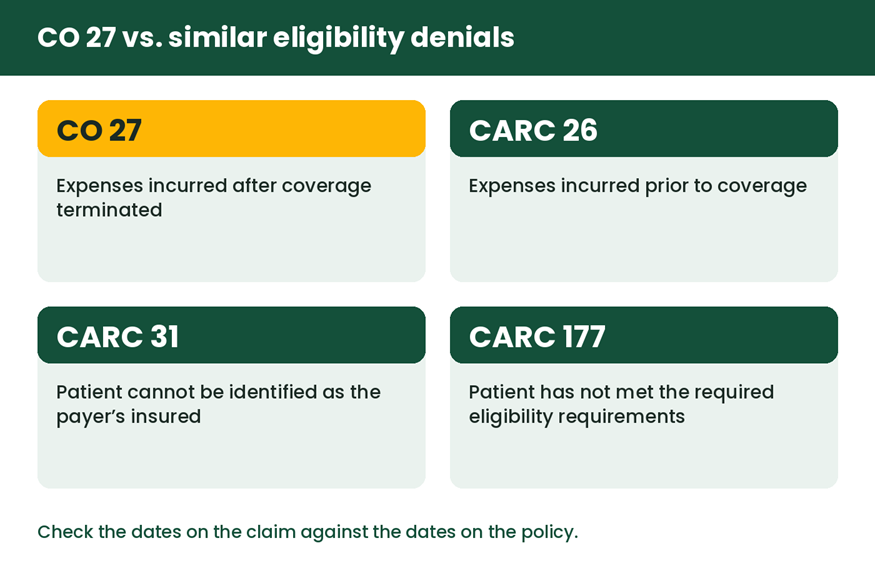
If the patient has two plans and the claim went to the wrong one first, expect [LINK: CO 22 | /co-22-denial-code/]. If the claim was sent to a plan that does not cover the patient at all, expect [LINK: CO 109 | /co-109-denial-code/].
How to Prevent CO 27 Denials
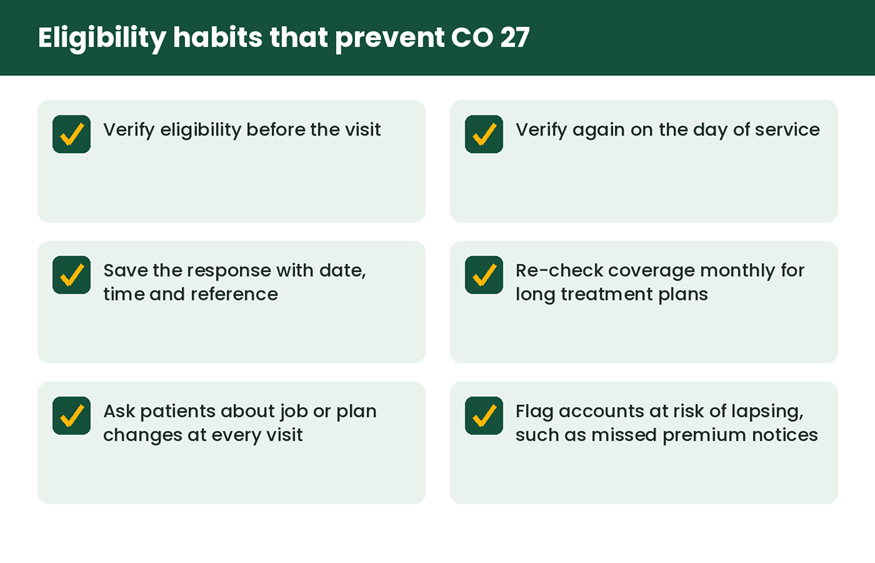
- Verify coverage before the visit and again on the day of service. Our [LINK: insurance eligibility verification process | /insurance-eligibility-verification-process/] guide shows the steps.
- Save every eligibility response with the date, time and reference number.
- Re-check coverage each month for patients on long treatment plans.
- Ask patients about job or plan changes at every visit.
- Review CO 27 denials monthly by payer to spot patterns.
Get Help With Eligibility Denials
If coverage-ended denials keep slipping through, our team can review a sample of your remittances and trace the cause to intake, verification or claim data. Learn more about our denial management services.
Frequently Asked Questions
Is CO 27 the same as PR 27?
They share the same reason, expenses incurred after coverage terminated. The group code is what differs. CO leaves the unpaid balance with the provider. PR can leave it with the patient. Read the group code on the remittance before you post the adjustment or bill anyone.
What if I verified eligibility and it showed active coverage?
Appeal with your saved verification record, including the date, time and reference number. A retroactive termination can still lead to a denial after you verified, so the payer’s contract and notices matter. Document the check at the time it happens, so you can prove it later.
Can a CO 27 denial be reversed?
Yes, if coverage is reinstated or the termination date was wrong. Ask the payer to review the eligibility record, and send the claim for reprocessing with any proof of coverage. Do not wait, because filing and appeal limits keep running while the coverage question is sorted out.
How is CO 27 different from CO 22?
CO 27 says coverage ended before the date of service. CO 22 says another payer may be responsible, so the claim reached the wrong plan or came in the wrong order. For CO 27 you confirm the coverage dates. For CO 22 you confirm which plan is primary.
How long do I have to rebill a new payer?
Each payer sets its own filing limit, and the clock is already running by the time you learn coverage ended. Check the new payer’s provider manual or contract right away. Send the claim with the correct member information as soon as you find the active plan.
Sources: X12 Claim Adjustment Reason Code list, HealthCare.gov grace period guidance and the CMS coverage effectuation job aid. This article is general education, not legal or payer-specific advice; your contracts and each payer’s provider manual govern how claims are processed.